DriveSafety
A reward-driven experience where slowing down pays off.
SUMMARY
DriveSafety was created for a Sheridan College Digital Product Design capstone project in partnership with ChangeMakers, a strategy, communications, and consulting firm.
-
Facilitator and Pitch Lead
-
14 Weeks
-
3 People
-
Figma and Netlify
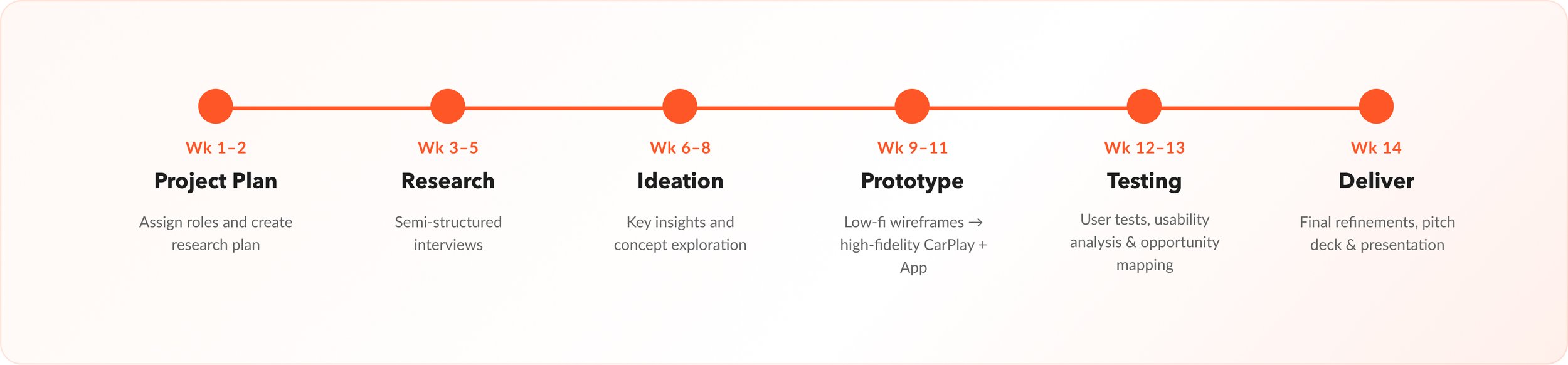
TIMELINE
THE PROBLEM
How might we create a digital-first product that challenges drivers’ self-image as capable by showing how speeding reduces reaction time on highways and in neighbourhoods?
USER RESEARCH
We conducted semi-structured interviews to understand speeding motivations and triggers, revealing that self-awareness is more effective than guilt or authority in changing behaviour.
Perception of control is misleading.
Drivers believe they are in control, even when speeding reduces their safety and reaction time.
Context influences speed more than rules.
Speed is influenced more by road conditions and other drivers than by posted limits.
Awareness works better than punishment.
Internal realization ("I shouldn't be doing this") is more effective than external enforcement.
Speeding is often an unintentional behaviour.
People drift into speeding without realizing it, especially on familiar or long routes.
OUR SOLUTION
-
I came up with the gamification concept and facilitated the sketches and prototypes.
Encourages positive behaviour change by reinforcing safe habits through incentives rather than punishment.
Increases awareness of unintentional speeding through real-time rewards and feedback.
Creates long-term engagement by making behaviour change feel achievable and rewarding.
CarPlay Widget
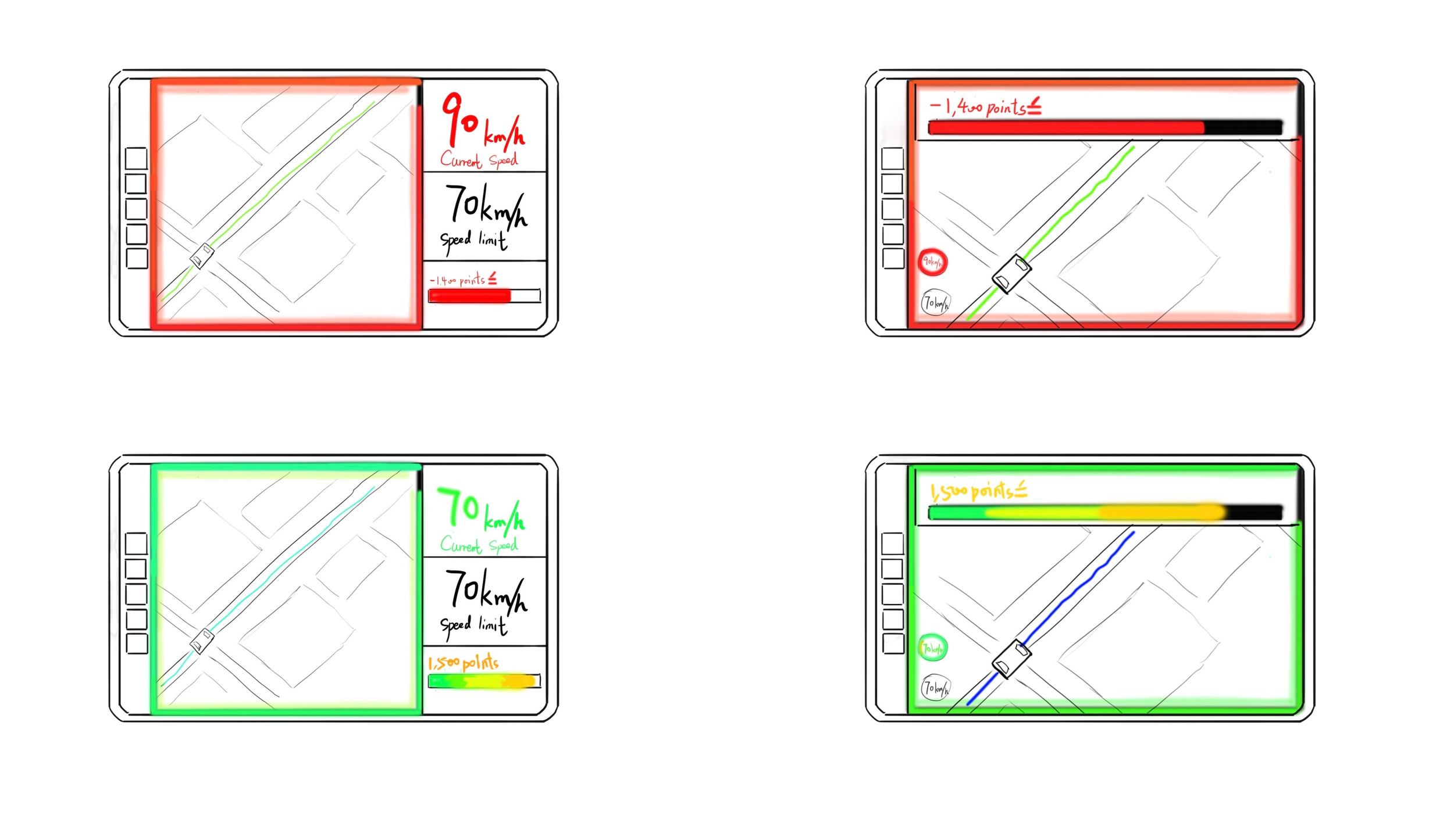
Prevents speeding in real-time by showing drivers when they are within, approaching, or over the speed limit and rewarding safe driving with coins.
-
Green, yellow, and red states instantly show whether drivers are within, approaching, or exceeding the speed limit.
-
A live progress bar shows coins being earned or paused based on driving behaviour.
-
Large text, simple messaging, and colour-coded feedback creates a non-distracting, glanceable driving status.
-
The widget delivers feedback in the driving environment where behaviour can be corrected in real time.
Rewards App
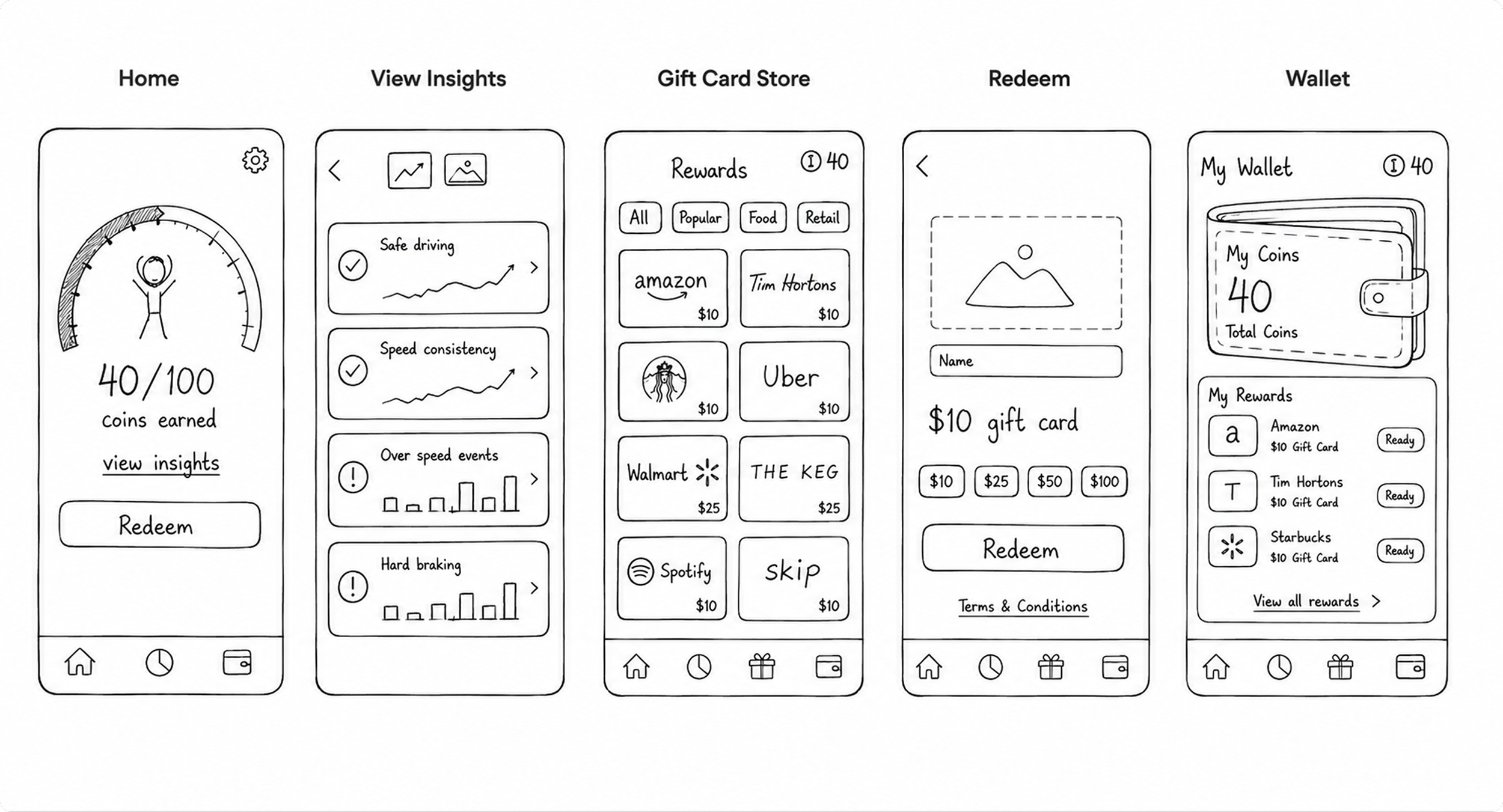
Improves driving habits overtime by showing trip insights, tracking earned coins, and rewarding safe behaviour with gift cards.
-
Tracks coins earned from safe driving and provides quick access to trip history, rewards, and saved gift cards.
-
Displays past drives with colour-coded routes, allowing users to review their driving performance and earned coins over time.
-
Breaks down individual trips into road segments, showing speed limit compliance, safe-driving scores, distance travelled, and rewards earned.
-
Allows users to browse and filter gift cards by category, making rewards easy to discover and redeem.
-
Lets users exchange earned coins for gift cards by selecting a reward amount based on their available balance.
-
Stores redeemed gift cards in one place, allowing users to view, manage, and access rewards when needed.
-
Generates a scannable QR code and voucher code that can be used directly at participating merchants.
USER TESTING
We conducted user tests for the CarPlay widget prototype and the Rewards App prototype to evaluate whether DriveSafety could realistically influence speeding behaviour. The tests targeted whether users could navigate the interfaces and whether the system successfully improved awareness and challenged motivations. I used a data-informed approach by synthesizing observations, participant feedback, and behavioural patterns across the tests to identify recurring strengths and friction points in both prototypes.
CarPlay Widget
Key insights:
Users understand safety feedback immediately, but not rewards.
The system discourages speeding well, but doesn't motivate safe driving enough.
Rewards need to be more visible, clear, and engaging.
In-car UI must prioritize instant meaning over interpretation.
Opportunity areas:
Make earning feel active and rewarding
Clearly display coins (not just $)
Show progress (per trip + total)
Strengthen positive reinforcement in the green state
Rewards App
Key Insights:
Users understand the system at a surface level, but not deeply.
The app shows what happened, but not why it happened.
Rewards are visible, but not fully explained or reinforced.
There is a gap between tracking behavior and helping users learn and improve.
Map data is useful, but needs better clarity and interactivity.
Opportunity areas:
Make rewards more transparent and explanatory.
Improve map clarity + interactivity.
Reinforce learning + behavior change through clearer feedback.
The testing insights allowed my team to move beyond assumptions and make strategic refinements grounded in real user behaviour and interpretation. My role in translating test findings into actionable opportunity areas helped ensure both prototypes could evolve into more refined digital products.
The project demonstrated that behaviour change is more likely when drivers understand their habits in the moment and are rewarded for safer decisions, reinforcing our original research insight that awareness is more effective than guilt or authority.
RESULTS
Drivers immediately understood the colour-coded speed feedback.
Positive reinforcement felt more motivating than punishment.
Real-time awareness helped users recognize unintentional speeding.
PROJECT OUTCOMES
Key Takeaway