Tournio
Taking the chaos out of tournaments.
SUMMARY
Tournio is a Sheridan College Digital Product Design project in the User Experience Fundamentals class. The project involved creating low-fidelity wireframes of a digital product concept that solves a problem identified in qualitative and quantitative observations of a public place. I observed participants in a soccer tournament.
-
Designer
-
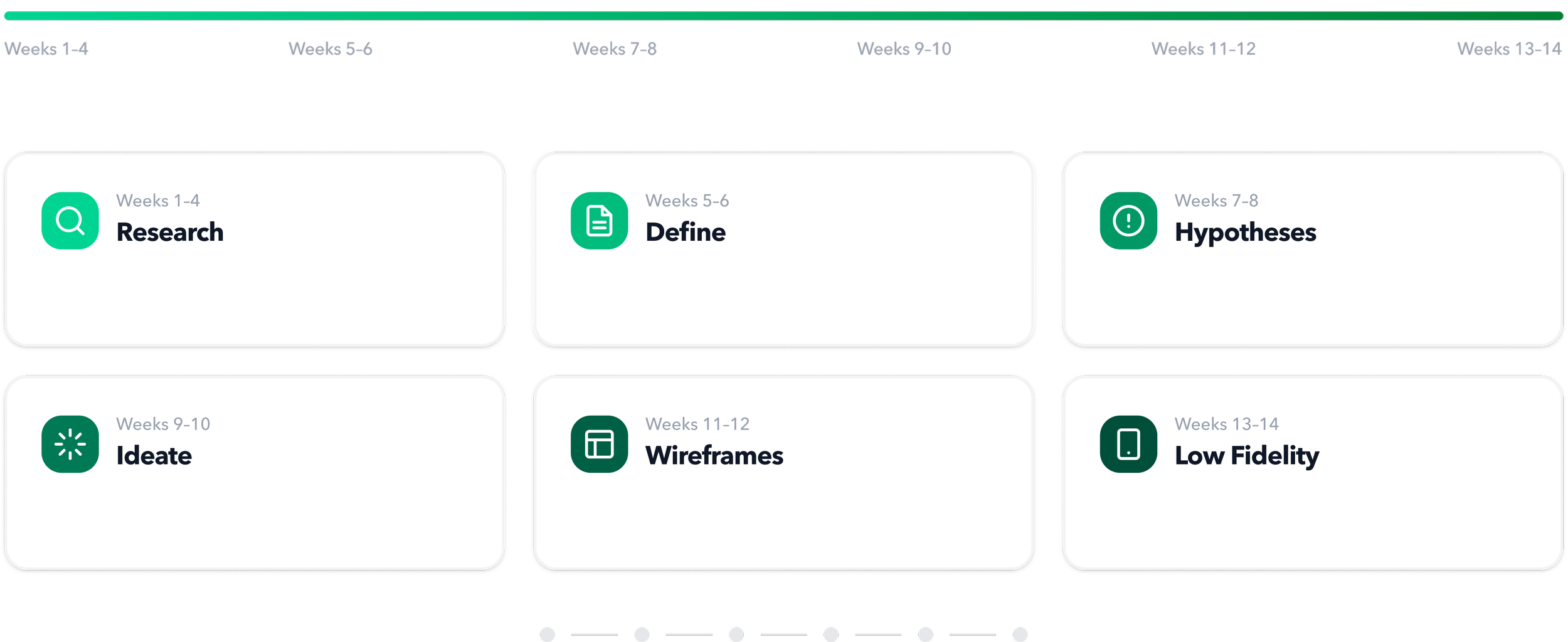
14 Weeks
-
Figma
TIMELINE
THE PROBLEM
How might I design a digital product that reduces field confusion so that tournaments can run smoothly?
USER INSIGHTS
I conducted qualitative and quantitative research by observing attendees at two different games in a soccer tournament. I identified themes common in both games based on my observations of the attendees.
Not enough parking.
The nearest parking lot was too small to accommodate all tournament attendees.
No nearby amenities.
Accessing food or washrooms required at least a 10 minute drive from the field.
No clear field indicators.
Fields were not marked which created confusion for teams and other attendees arriving for a scheduled game.
HYPOTHESES
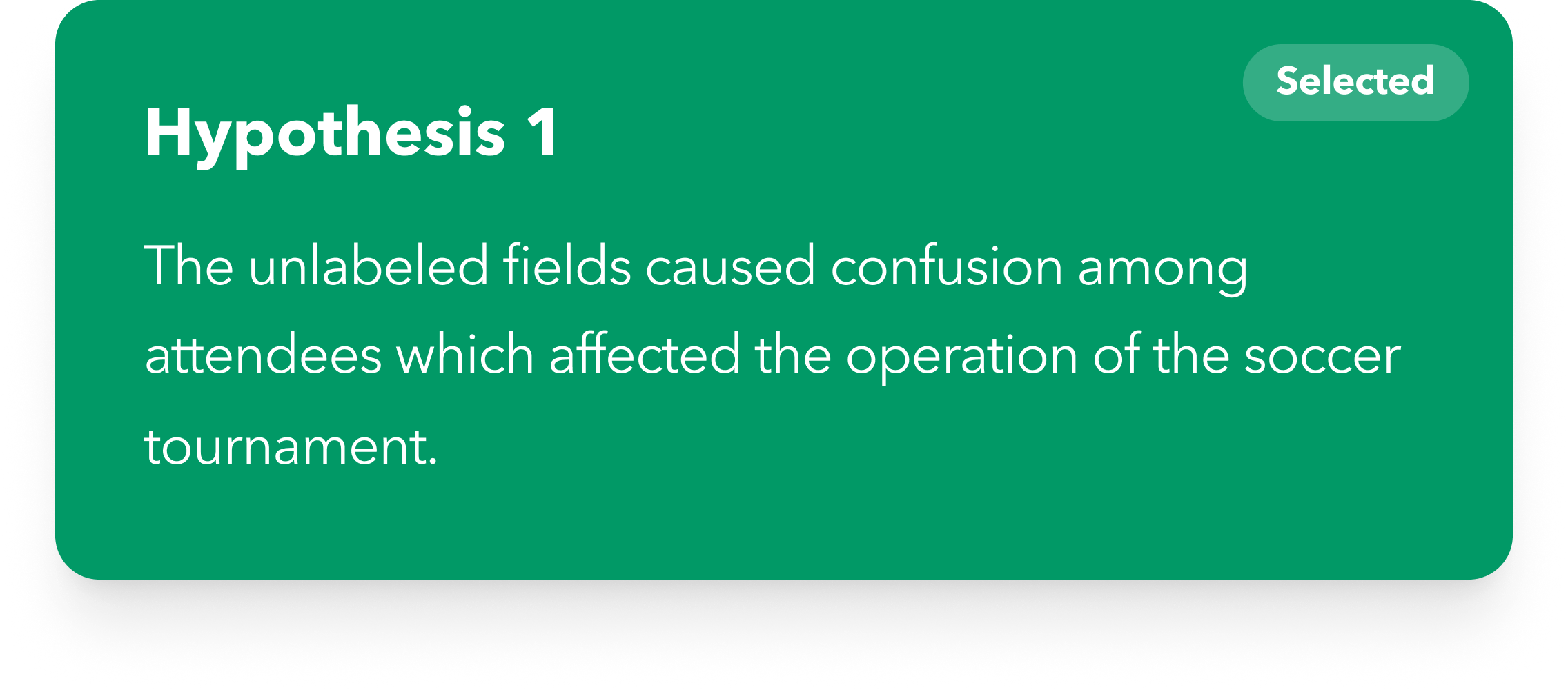
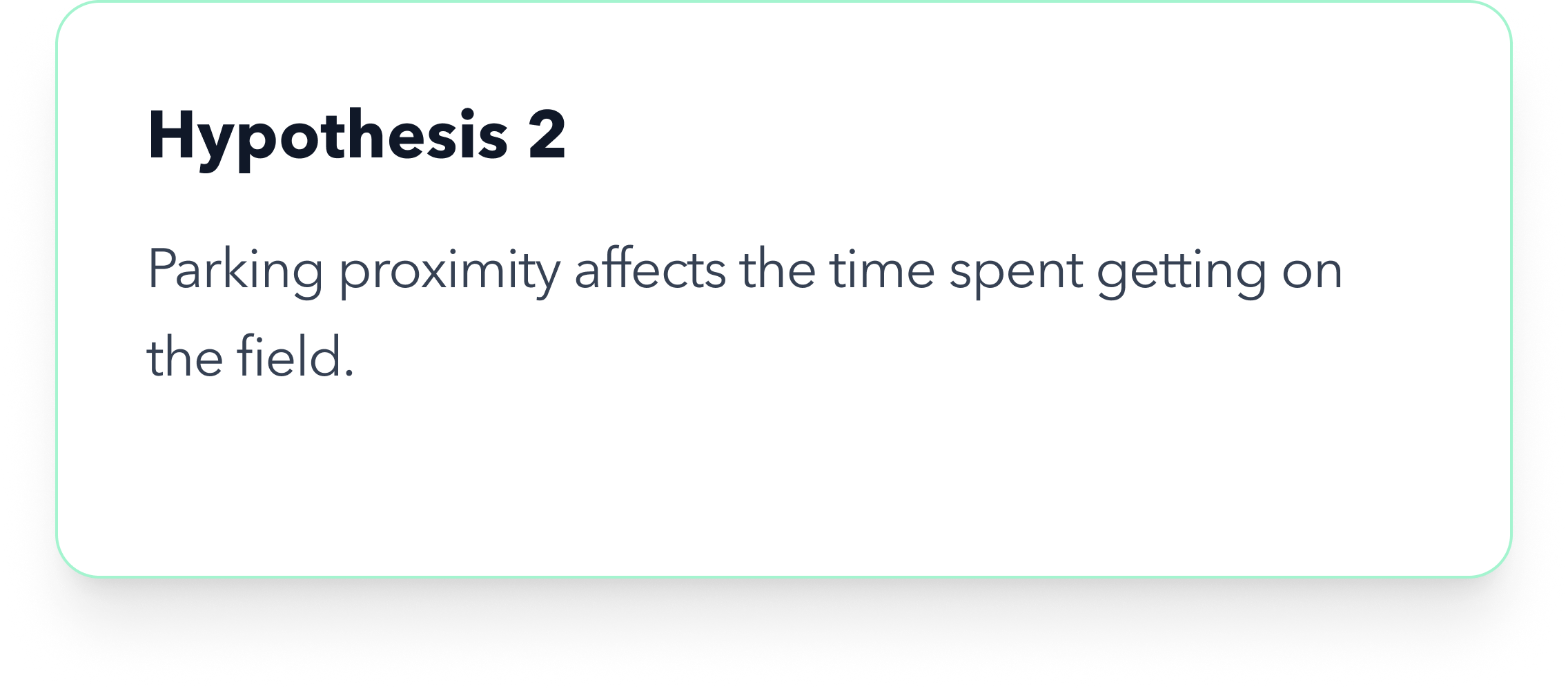
I proposed two hypotheses and selected hypothesis 1 to base the design on because there is a direct user pain point capable of improvement through design unlike external factors present in hypothesis 2. Prioritizing Hypothesis 1 led to a clearer and more actionable design direction by focusing on an issue that could be directly improved through better communication and navigation.
WIREFRAMES
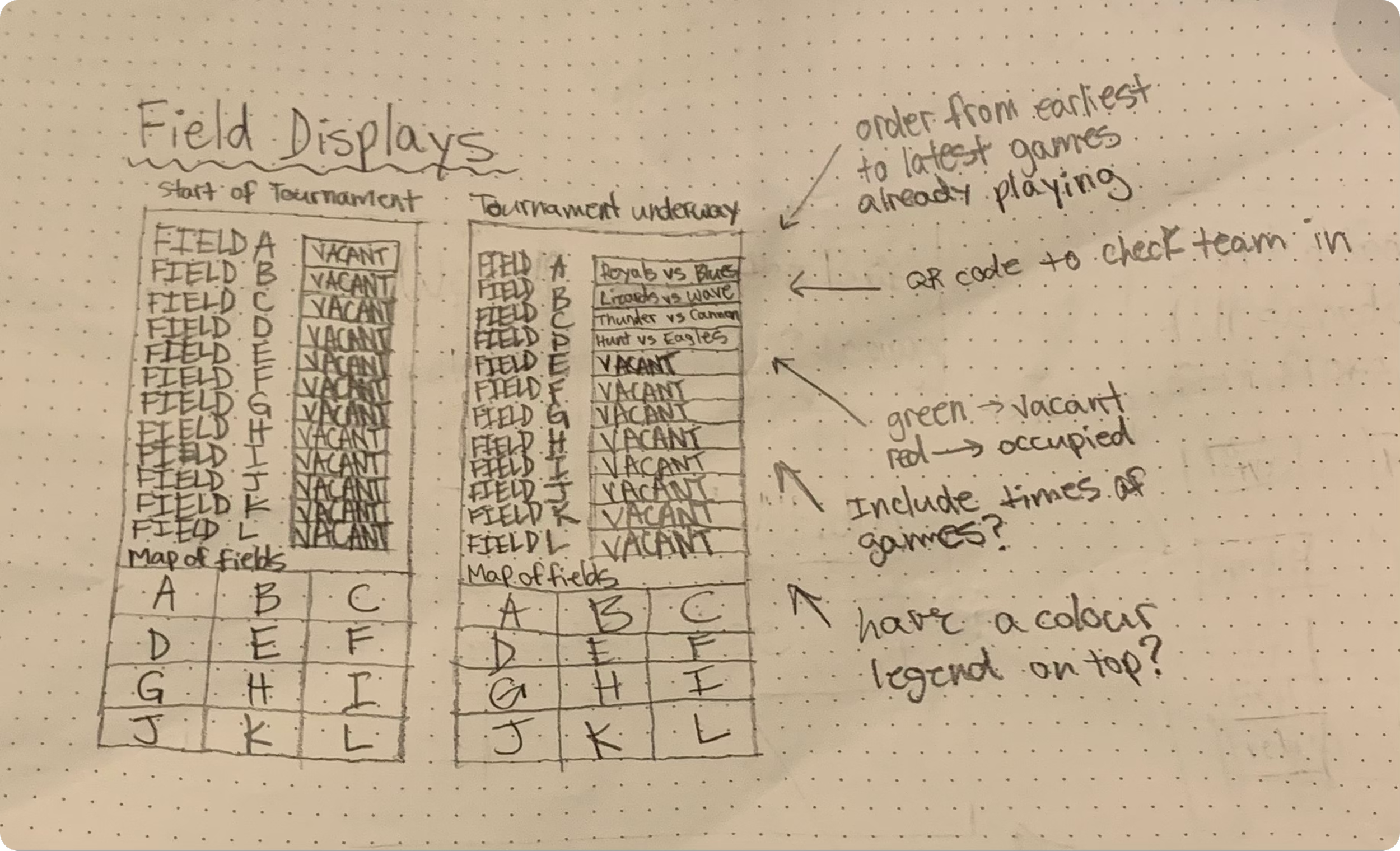
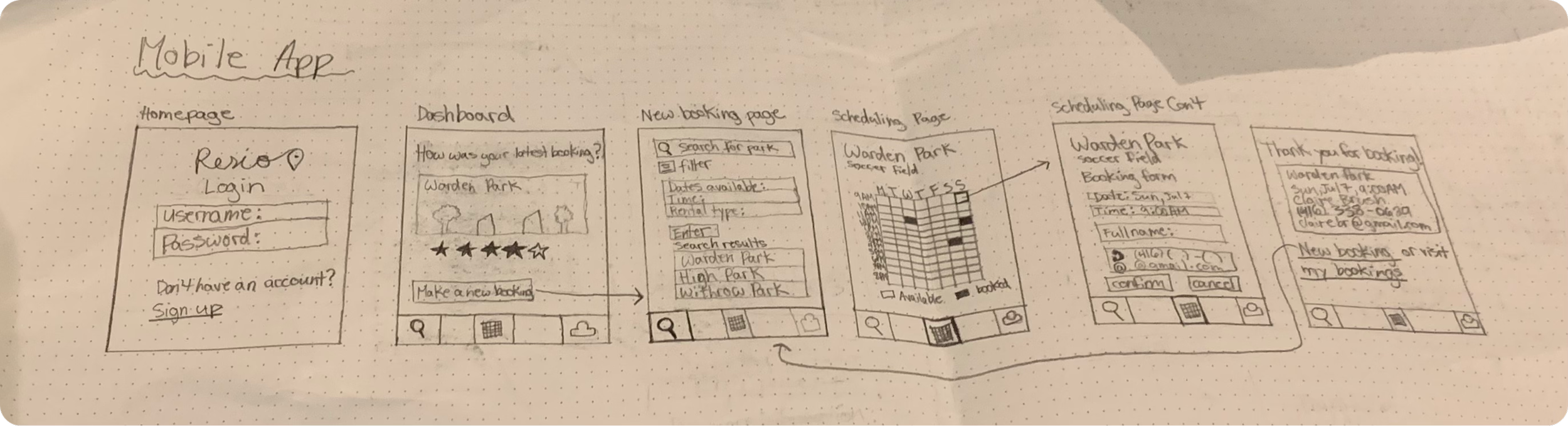
My concept originally consisted of two components: a field directory and a tournament scheduling app. However, I realized that developing a directory app for attendees to search by teams and fields in real time would better address tournament confusion.
LOW FIDELITY
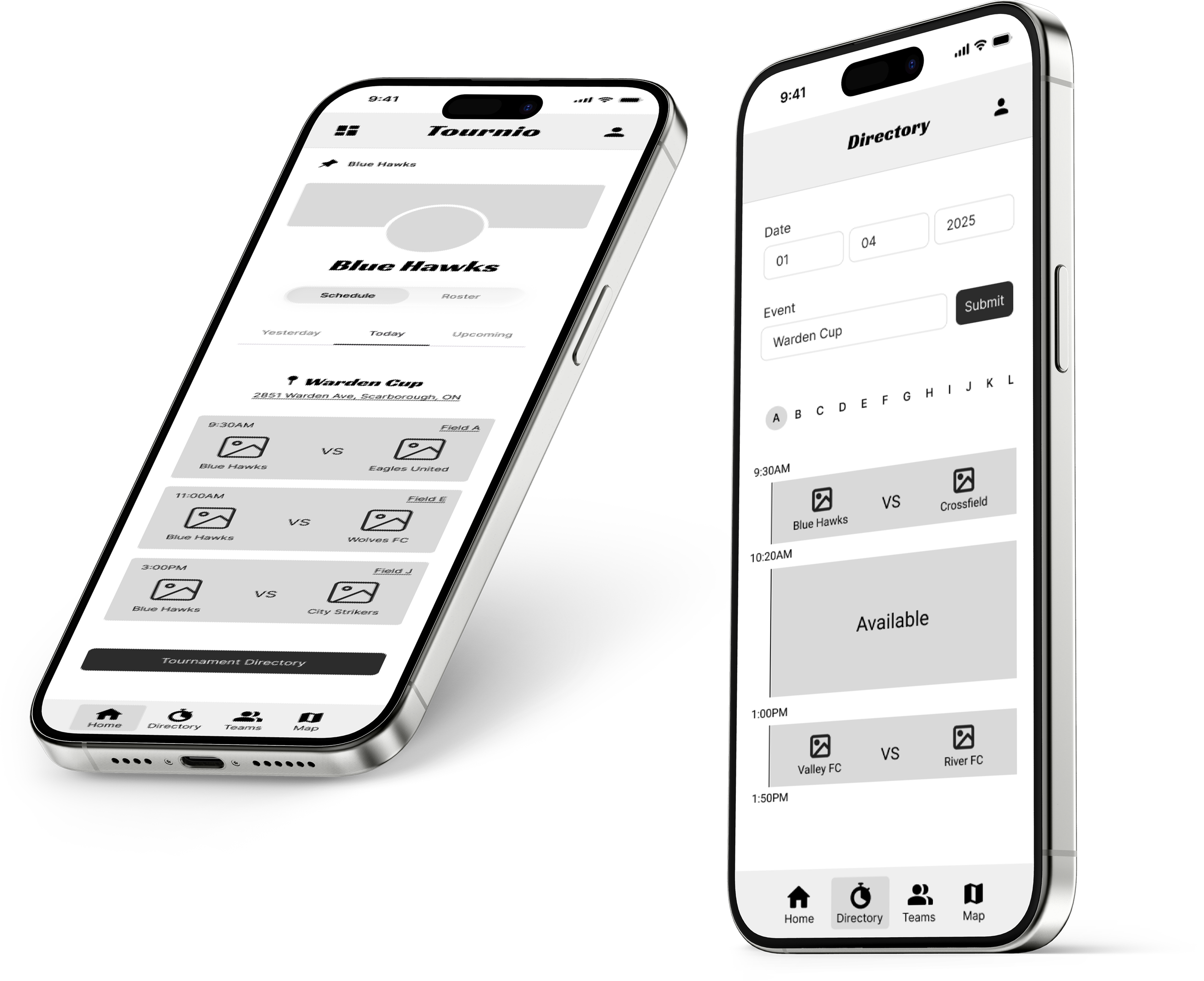
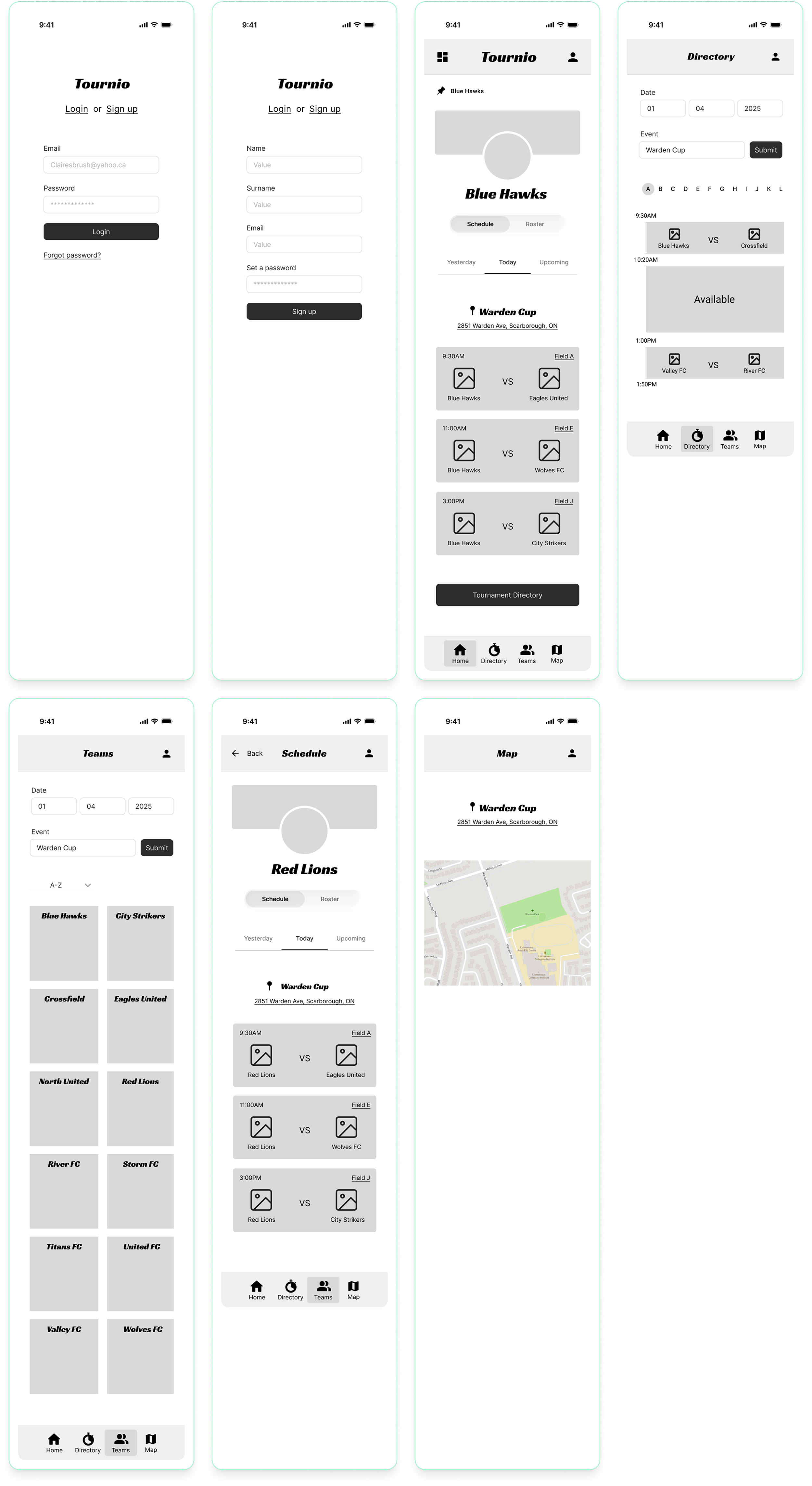
I created low fidelity wireframes with an updated layout and user flow. The low fidelity wireframes have a clearer narrative that targets the problem through strategic use of layout and hierarchy.
-
A pinned team gives quick access to schedules, rosters, and messaging.
-
Game times organized by fields A–L for quick, at-a-glance scanning.
-
Consistent layouts across team pages reduce navigation friction.
-
Centralizes tournament locations so attendees can find fields quickly.
RESULTS
The low-fidelity wireframes streamlined the tournament experience by providing a centralized directory for teams, schedules, and field locations, helping users spend less time searching and more time enjoying the event.
Validated the primary user problem through observation and hypothesis testing.
Simplified tournament navigation with clear field directories and team-based navigation.
Reduced cognitive load by organizing schedules, maps, and team information into a single experience.
Designed a low-fidelity version of a scalable mobile interface that supports players, coaches, and spectators throughout a tournament.
PROJECT OUTCOMES
Key Takeaway